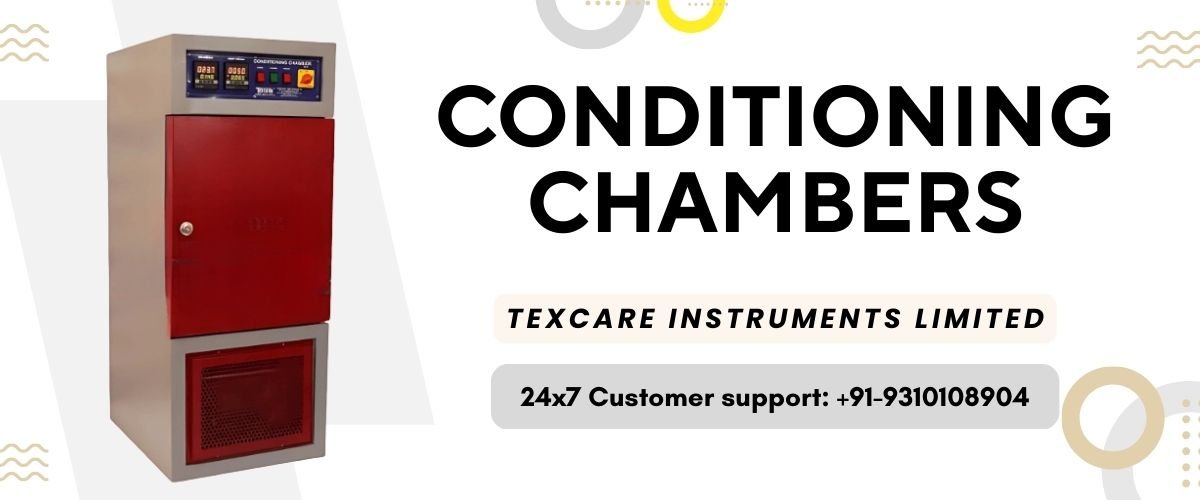
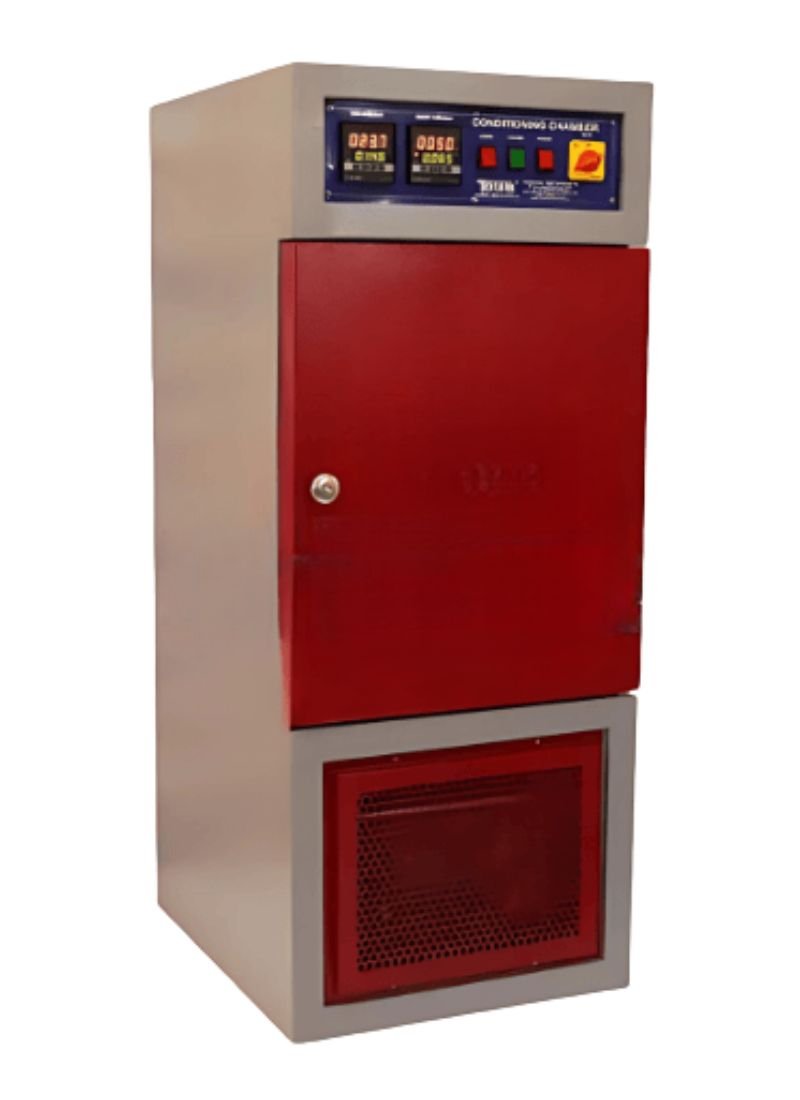
How does the Conditioning Chamber work on Textile Products?
Conditioning Chambers are also called Humidity Testers or Temperature and Humidity Chambers. Textile Industries, call them Textile
Conditioning Chambers. Textiles are highly sensitive and have hygroscopic agents in them, which help the textiles to absorb moisture,
retain the same, and manage it, turning the textile comfortable and acting like a cooling agent. Textiles are made up of different fabric
material and every material is derived from various sources which was grown in different seasons. This nature of textiles makes it hyper
sensitive and reacts easily to humidity. Textiles are not only made of yarn or cotton, but the chemicals, dyes, and colours used in the
product also react to environmental change. These Textile Conditioning Chambers help to understand the temperature and the humidity levels
while testing a product.
How does the Environmental Conditioning Chamber really work?
Environmental Chambers are huge and simple to use. Their main purpose is to recreate environmental situations on the product sample or
specimen therein. These machines use dust, temperature, humidity, rain, air pressure, vibrations, and sudden shocks on the product specimen
for better results. These Environmental Conditioning chambers are highly used by aerospace, automotives and air force or defence
departments. These test results give the manufacturer a fair idea about the durability, resistance, and quality of the product.
There are different types of Environmental Chambers, like:
-
Temperature and Humidity Chambers
-
Thermal Shocks and Vibration Chambers
-
Corrosion and Battery Test Chambers
-
Dust and Rain Chambers
-
High Altitude Test Chambers
-
Huge Walk-in Chambers